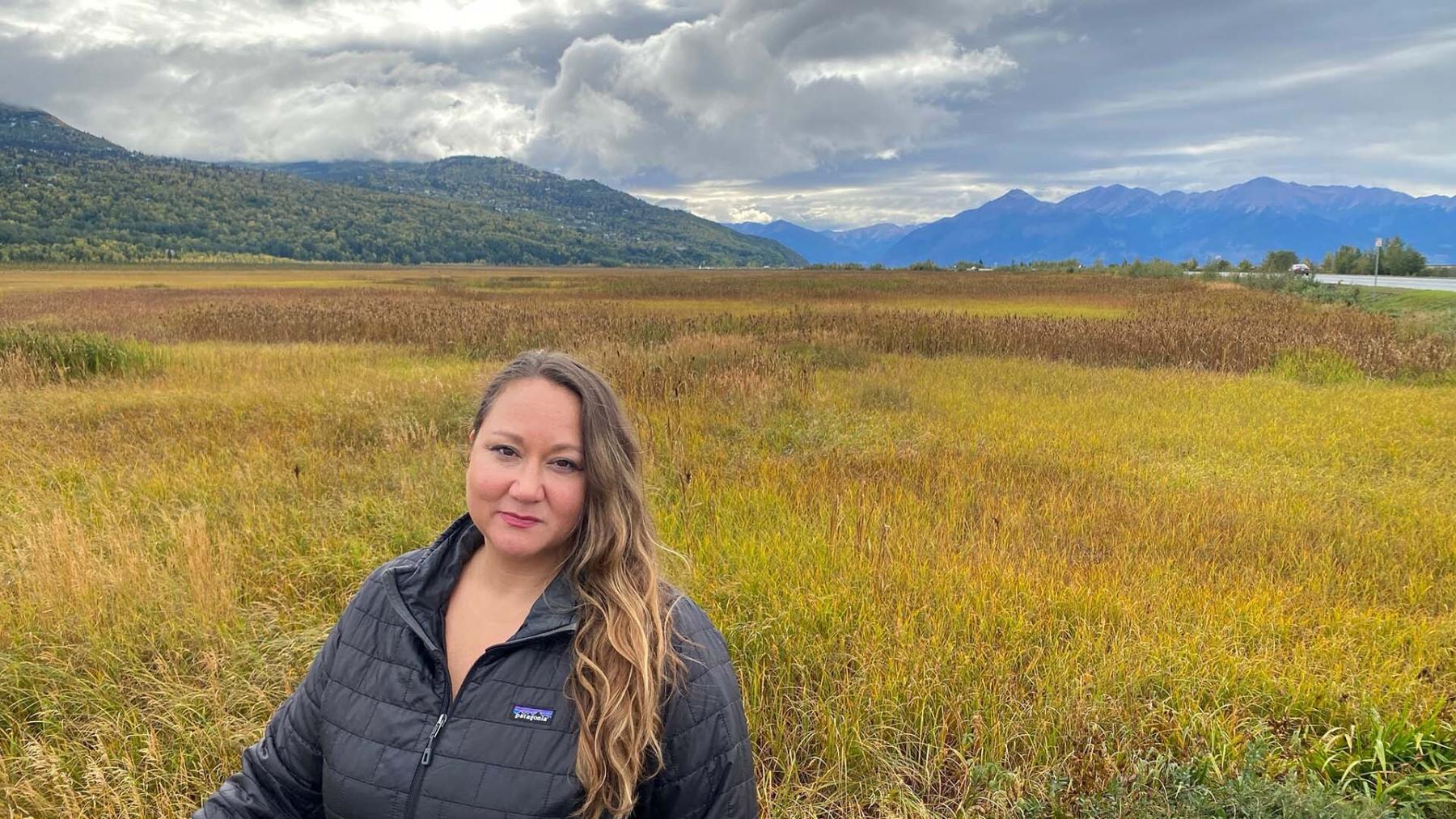
Rooted in responsibility: The leadership journey of Starlyn Rose Miller
As the Senior Director of Native Lands Partnerships at The Wilderness Society (TWS), Starlyn Rose Miller’s work sits at the intersection of law, sovereignty, public trust and conservation.
Her story illustrates why Indigenous-led leadership is essential in today’s nonprofit and public-sector landscape. And a pivotal chapter came when she enrolled in the ASU Lodestar Center for Philanthropy and Nonprofit Innovation’s Nonprofit Executive Leadership Certificate, an experience she says transformed how she leads and prepared her to navigate the cross-sector complexity that is today’s nonprofit reality.
When Starlyn reflects on her journey, she doesn’t begin with policy achievements, legal victories or the trailblazing alliances she has fostered. Instead, she goes back to where leadership began for her: home.
An enrolled citizen of the Little Shell Chippewa Tribe of Montana, she was born and raised in Milwaukee, Wisconsin, but her sense of identity and purpose was shaped on the homelands of her family, her father’s Menominee reservation and her mother’s Stockbridge Mohican reservation in northern Wisconsin.
That grounding in Native history, sovereignty and collective responsibility would guide every decision she later made, as a student, an attorney, a mother and now as a national leader in Indigenous-led conservation.
A childhood shaped by injustice and resolve
Starlyn’s path toward advocacy began with heartbreak. When she was seven, her father passed away at only 28. What followed was a painful lesson in inequity. “There were some injustices, what I saw with the insurance company, and my mom had to take that case all the way to the Wisconsin Supreme Court,” she recalled. Her mother, raising two children alone, lost the case. As a child, Starlyn watched her family fight for dignity and answers and be denied both.
“Seeing that injustice, especially at seven years old, I really wanted to be a leader and do what was right and advocate for my family and Native people as well,” she said. “So, the more I learned about my culture, my history, my ancestors, the fact that many of my ancestors were diplomats, chiefs of both Mohican and Menominee tribes and had huge responsibilities to community, the more I leaned into that as a Native woman and really found my footing in college.”
In college at the University of Wisconsin-Madison, she found her footing: involvement in Native student initiatives, including becoming a sister of Alpha Pi Omega, one of the first Native American sororities on campus; campus activism; and community-based leadership.
Finding her calling in law and tribal advocacy
After completing her bachelor’s in English Education, Starlyn began exploring what leadership would look like in practice. A Tribal Legal Studies course at the College of Menominee Nation opened the door. Working as an AmeriCorps VISTA with the Menominee Aging Division, she knew she wanted to continue studying.
She applied and was selected for the Native American Political Leadership Program in Washington, D.C., where she spent a semester at George Washington University learning political leadership and campaign organizing. She later joined the Pre-Law Summer Institute through the University of New Mexico before starting law school at the University of Wisconsin-Madison, finishing in just two and a half years, all while getting married and raising her first child.
What followed was 16 years of service as a tribal attorney, six years with the Stockbridge-Munsee Community and seven with the Menominee Indian Tribe of Wisconsin.
Joining The Wilderness Society
Starlyn’s work today sits within the long legacy of The Wilderness Society, one of the country’s most established public lands conservation organizations. Since 1935, the organization has helped permanently protect nearly 112 million acres of wilderness across 44 states and has been at the forefront of nearly every major public lands victory in U.S. history.
At The Wilderness Society, she now leads Native Lands Partnerships with a mission: to catalyze collaborations, alliances and partnerships and lead a team to develop policy priorities and positions that advance protection of cultural and sacred sites, co-management on public lands and large landscape protection which center Native and Indigenous people’s history, sovereignty and interests.
At The Wilderness Society, Starlyn found a place where legal advocacy, Indigenous sovereignty and capacity building could coexist. Indigenous leadership is not a complement to conservation, it is central, she says. “They're essential and they've been missing from the beginning of these conversations of whatever green and conservation organizations. There are challenges with the concept of wilderness and thinking that it's untouched by human hands.
“No, it was stewarded that way.”
Her vision for the future emphasizes collaboration and shared purpose: “We need Indigenous-led organizations being funded more effectively and meaningfully… I think we all just need to get together and focus on where we mutually have common goals.”

Strengthening her leadership at ASU
Starlyn describes her experience in the Nonprofit Executive Leadership Certificate at the ASU Lodestar Center as transformative, an opportunity to deepen the values that already anchor her leadership and expand her skillset for navigating complex partnerships. The online certificate program from the Center’s Nonprofit Management Institute is a 6-month learning experience that educates, empowers and connects executive directors, senior-level managers and emerging executives of nonprofit and public organizations.
What resonated most were the program’s core pillars: public trust, systems thinking, governance and values-based leadership. For Starlyn, these weren’t abstract concepts, they directly mirrored the foundations of her work with Tribal Nations.
She explains that public trust and influence stood out immediately. “Meaningful relationships based on transparency and trust is the name of the game. We must have that in working with Tribal Nations and Indigenous people. We owe that to the relationship, whether it's good news or bad news.”
Another module that sparked new thinking was social entrepreneurship and innovation. “It really got me thinking differently about work,” she said.
For someone working at the intersection of conservation, sovereignty and community well-being, the course helped her approach systems change with fresh ideas and new tools.
She also emphasized how meaningful she found the program’s focus on governance and mechanisms of change: “The governance structure, recognizing different mechanisms of change within culture, there was so much I learned in the ASU program.”
Beyond theory, Starlyn connected deeply with the program’s commitment to ethical, inclusive and transparent leadership. These values reflect the way she works with Tribal Nations and Indigenous nonprofits.
“Being transparent is very important. Showing up and adding capacity, little things like taking notes and doing the heavy lifting, means a lot to relationship building and trust,” she said.
These practices have strengthened the partnerships she leads. Monthly meetings, shared notes and consistent communication have allowed her team to respond quickly to urgent policy issues, because partners trust that their voices will be respected and elevated.
Starlyn’s experience in the Nonprofit Executive Leadership Certificate ultimately strengthened the core values that guide her work while equipping her with new tools to lead in complex, collaborative environments. The program’s focus on public trust, innovation, governance and values-based leadership not only reinforced practices she already embodies but also expanded her strategic thinking and approach to systems change.
Looking forward: A future rooted in resilience, community and Indigenous women’s leadership
As she looks 10 or 20 years ahead, Starlyn envisions a conservation movement transformed by Indigenous knowledge, women’s leadership and collective responsibility. She sees Native-led organizations funded equitably, policy shaped with Tribal Nations at the table from the start and public understanding grounded in truth rather than erasure.
In a changing climate and political landscape, she believes the path forward lies in resilience, adaptability and unity.
Today, Starlyn stands at the intersection of policy, advocacy and cultural responsibility, carrying her ancestors with her, uplifting Indigenous colleagues and shaping what conservation can become when Native leadership is centered rather than sidelined.
Her story is one of resilience, wisdom and vision. For the landscapes she protects, and for the generations yet to come, her next chapter is already transforming the field.
Image courtesy of Starlyn Rose Miller
Lead your organization with an expanded network and skillset from the Nonprofit Executive Leadership Certificate
The Nonprofit Executive Leadership Certificate is designed to meet the professional needs of executive directors, senior-level managers and emerging executives of nonprofit and public organizations, offered in a cohort format to promote skill-building and peer networking among seasoned leaders facing challenges just like yours.
Nonprofit Management Institute Nonprofit Executive Leadership Certificate leadership development professional development Sofia Brito